On the Courtyard02Design Proposal
The Built Form
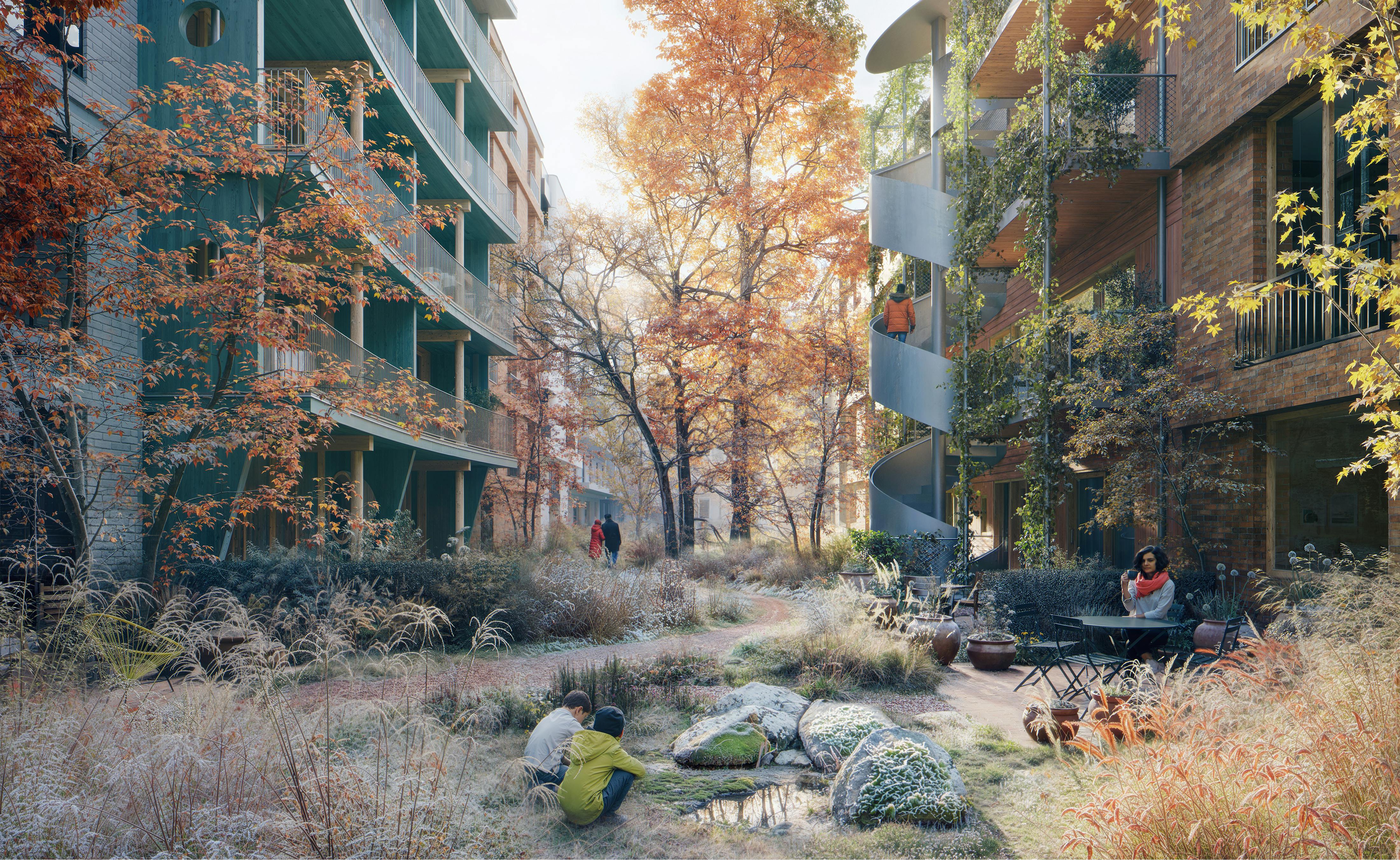
Each city block would see the creation of one to two courtyards—new semi-public third spaces, each with its own character. Whether or not individual yards open directly to the rest of the courtyard, the courtyards provide visual relief even in the most urban environments. Where soft landscaping and permeable hard paving are used, the courtyards also mitigate the heat-island effect and double as sponges for rainwater retention.
Built Form

By bringing façades closer to the sidewalk and creating potential commercial spaces at street level, courtyard blocks create a more engaging pedestrian experience along primary streets.
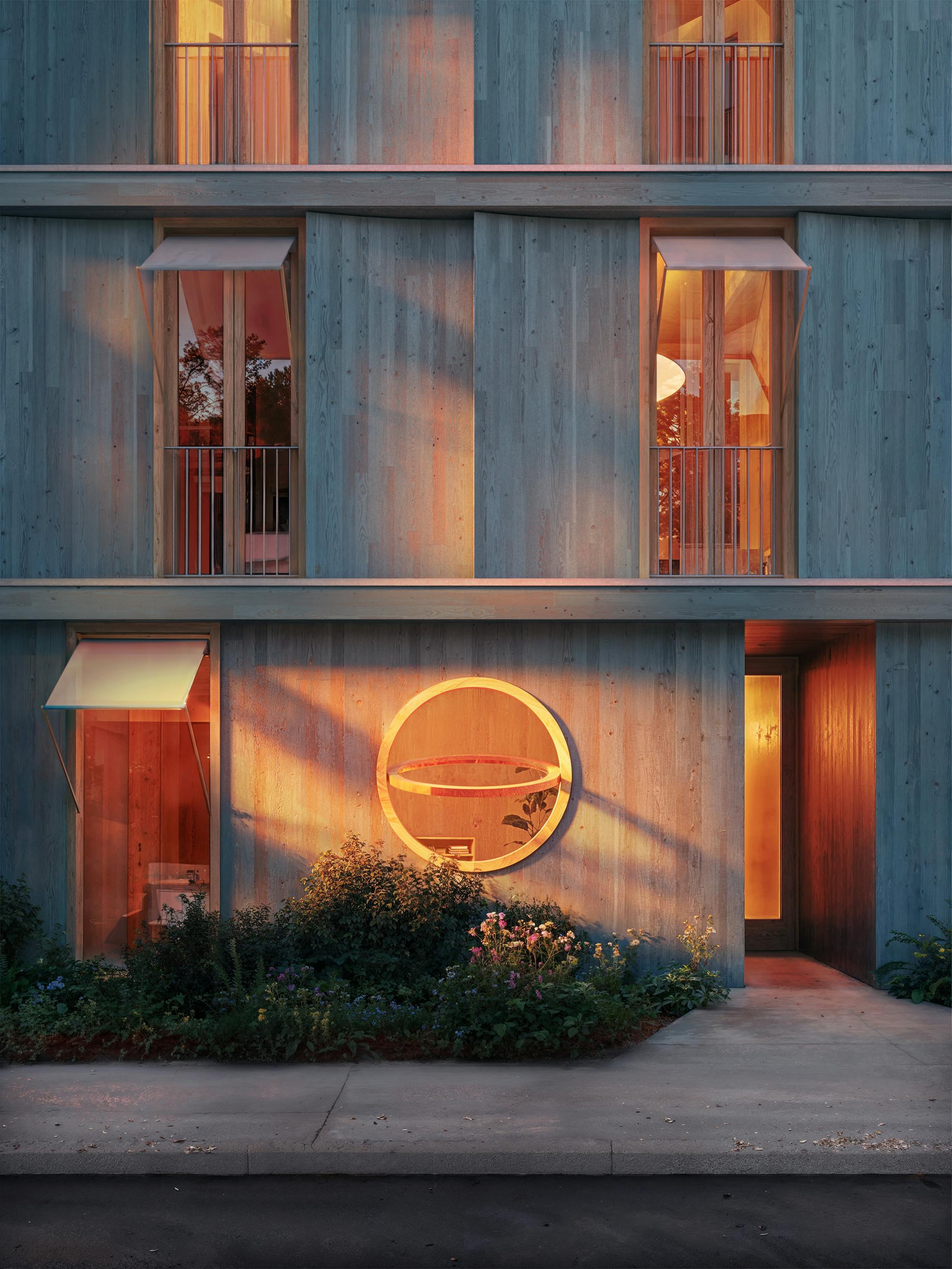
Many communal infrastructural needs (such as trash collection and bicycle parking) are centralized and pushed into the public realm, rather than decentralized and duplicated within each individual building.
Renders
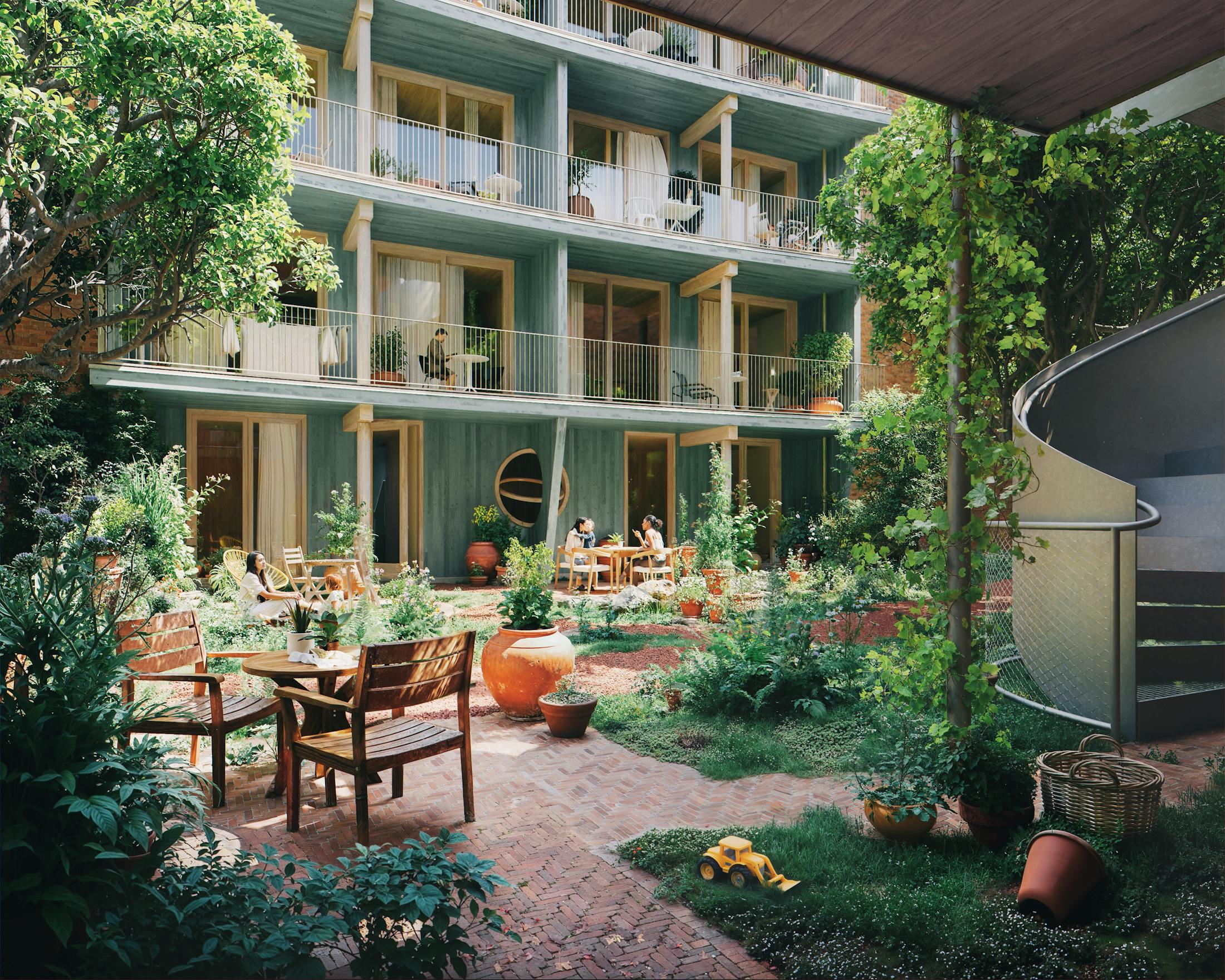
The buildings themselves might have few, if any, amenities. The courtyard and—especially in the vibrant downtown core—the city are the amenities. The community also becomes an amenity: you are more likely to meet neighbours when you share the same stairwell and outdoor space.
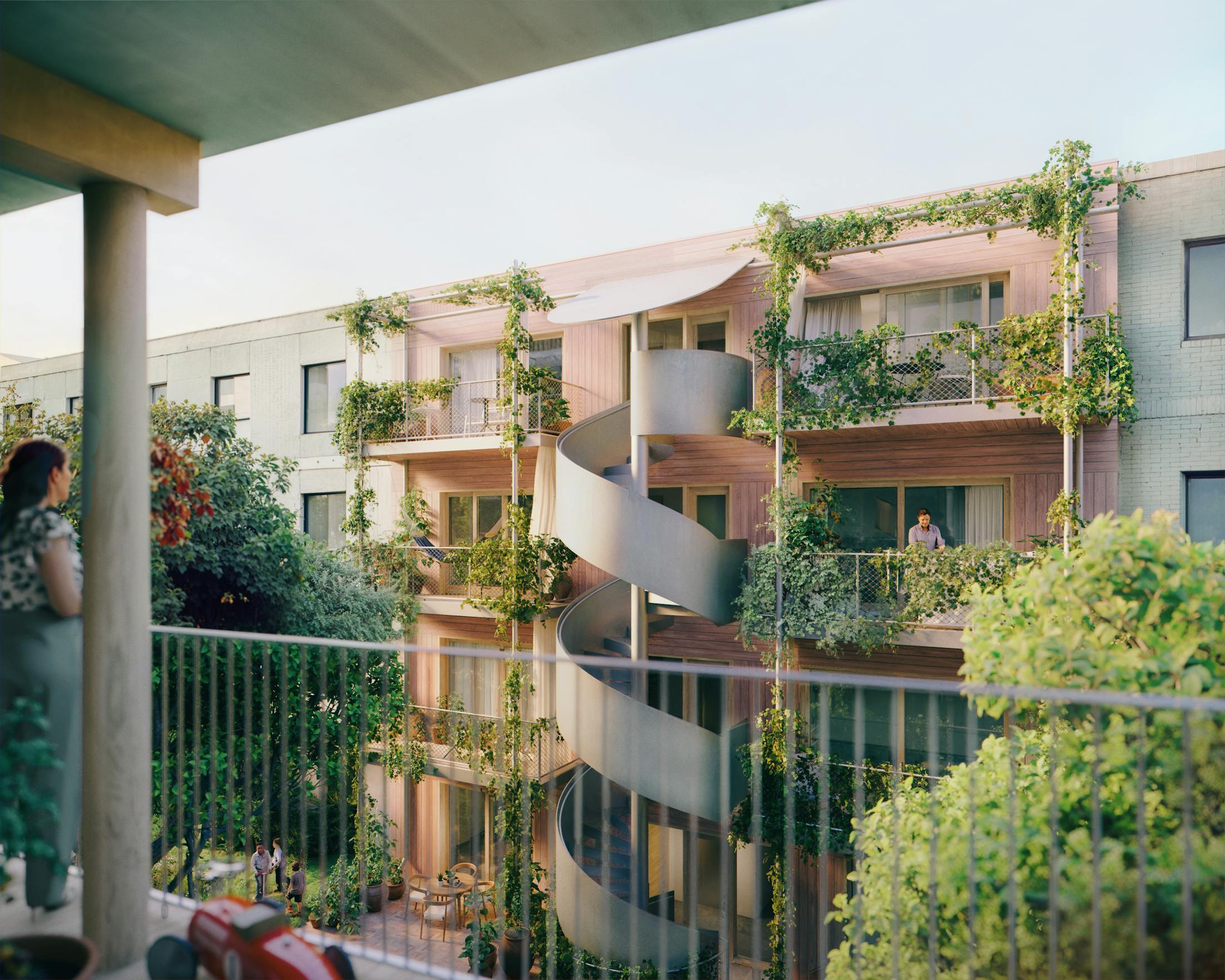
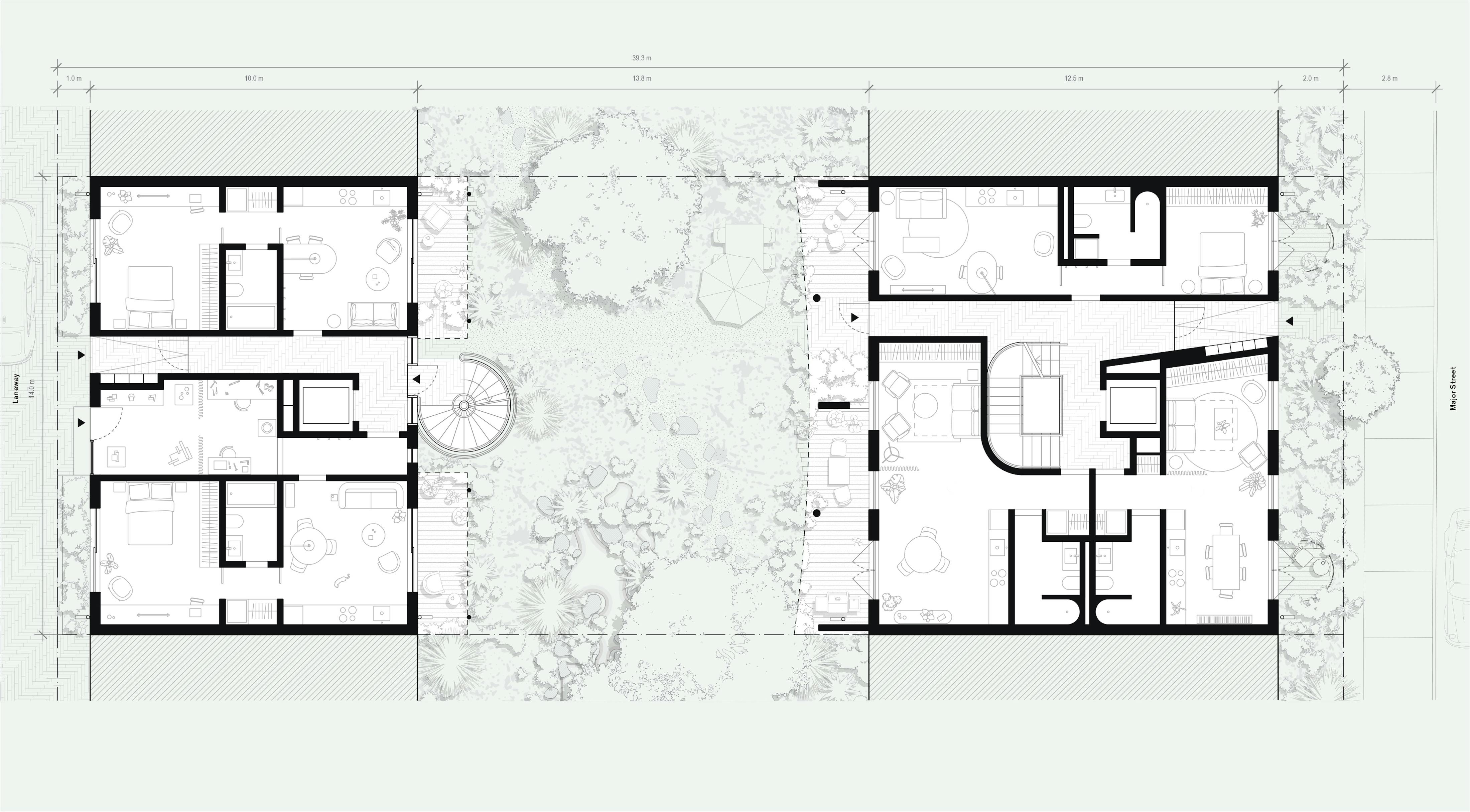
In our Toronto courtyard design, we seek to blur the boundary between front and back, inner and outer courtyard buildings. Are the lower laneway residences separating two courtyards from each other or instead sitting within one much larger courtyard? Depending on the density and porosity of construction along the laneway, either reading of the courtyard is possible.
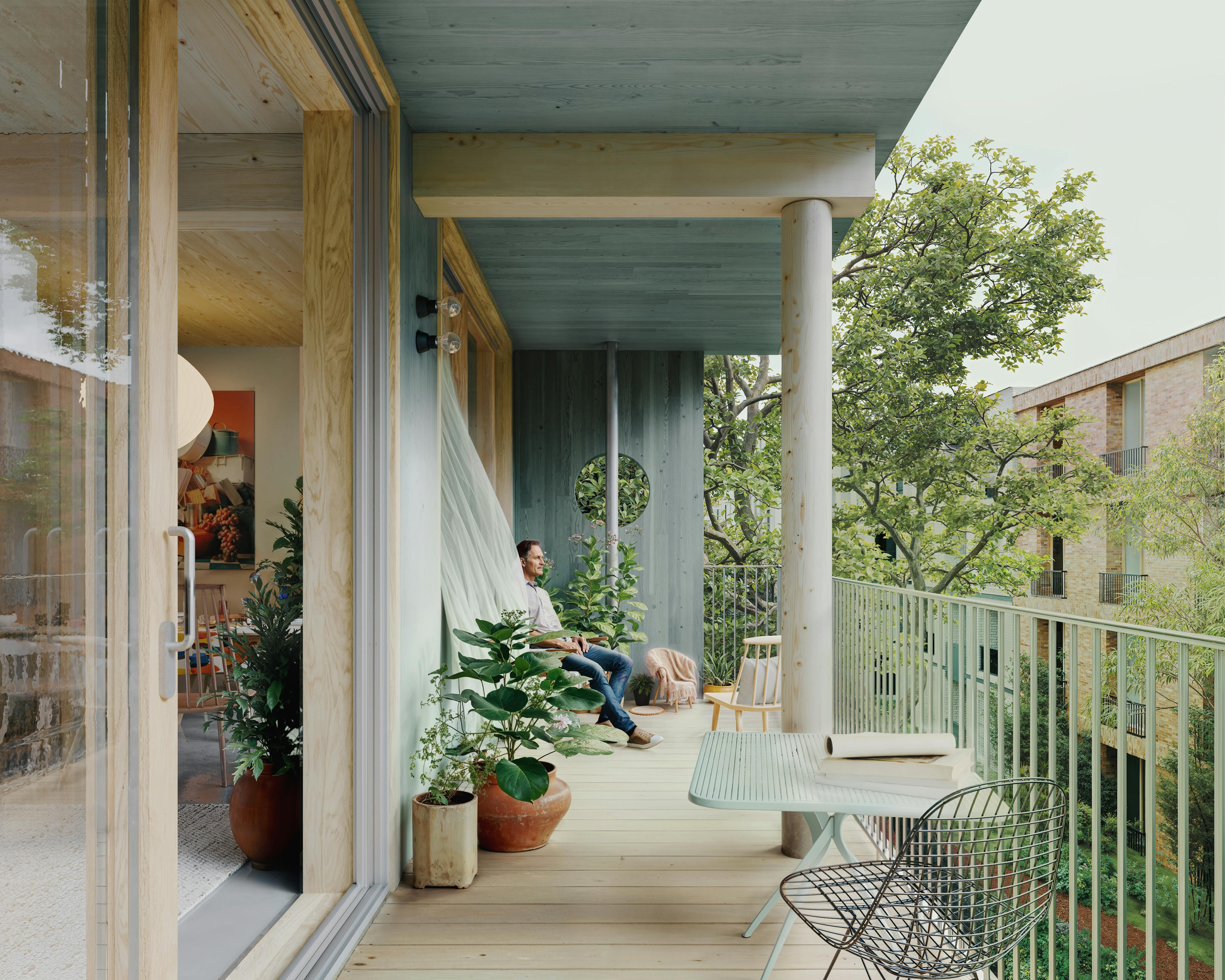

With deep balconies and operable exterior blinds to provide shade, through-units that allow for direct cross-ventilation, and concrete floors that can absorb and radiate solar heat in the winter, the building is designed to provide a measure of passive heating, cooling, and ventilation.

The primary goal of the interior architecture is to provide high-quality living spaces, with well-proportioned rooms, generous windows for natural light and ventilation in all main spaces, excellent thermal and acoustic insulation, and a strong connection to the outdoors through balconies or Juliet balconies.
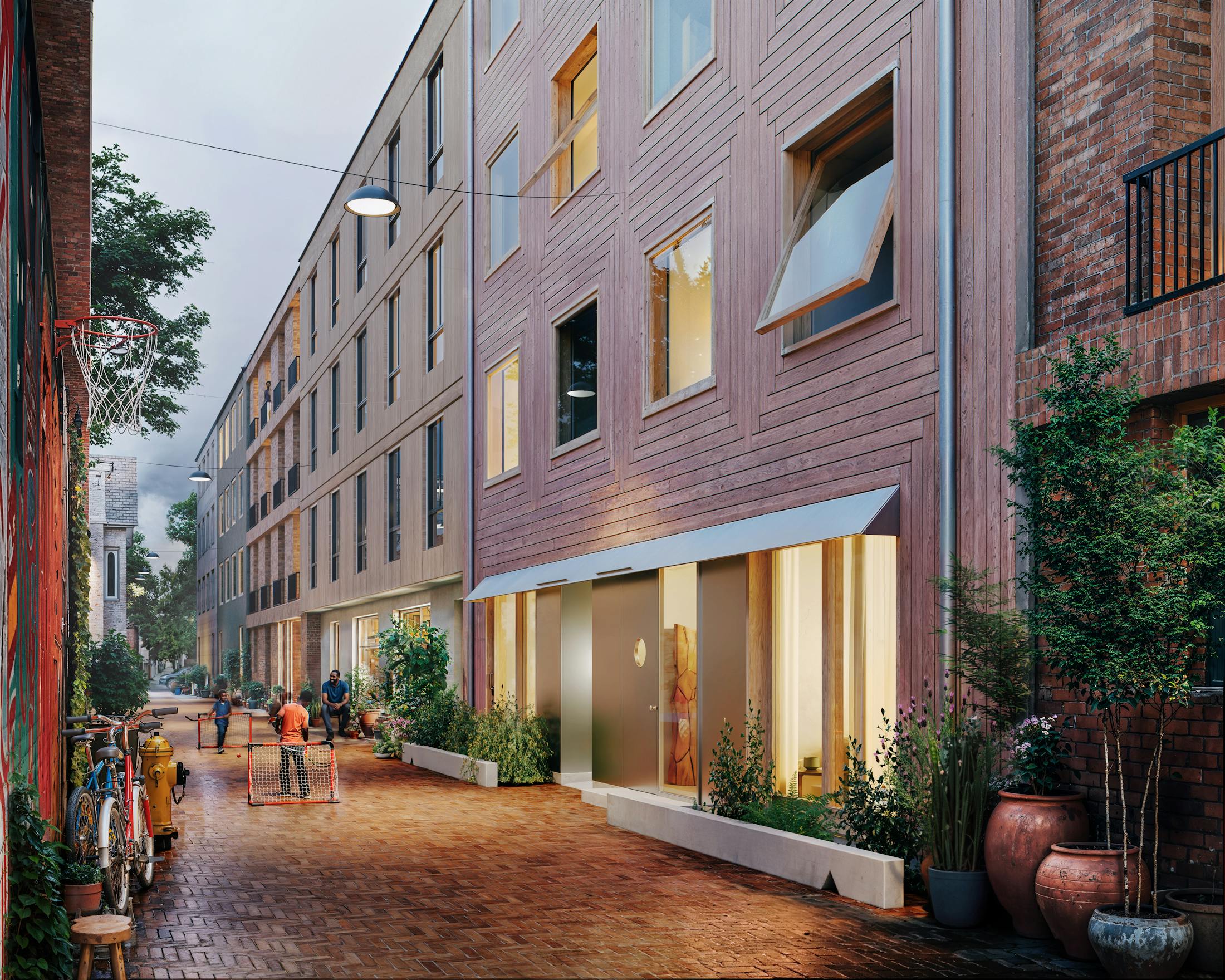
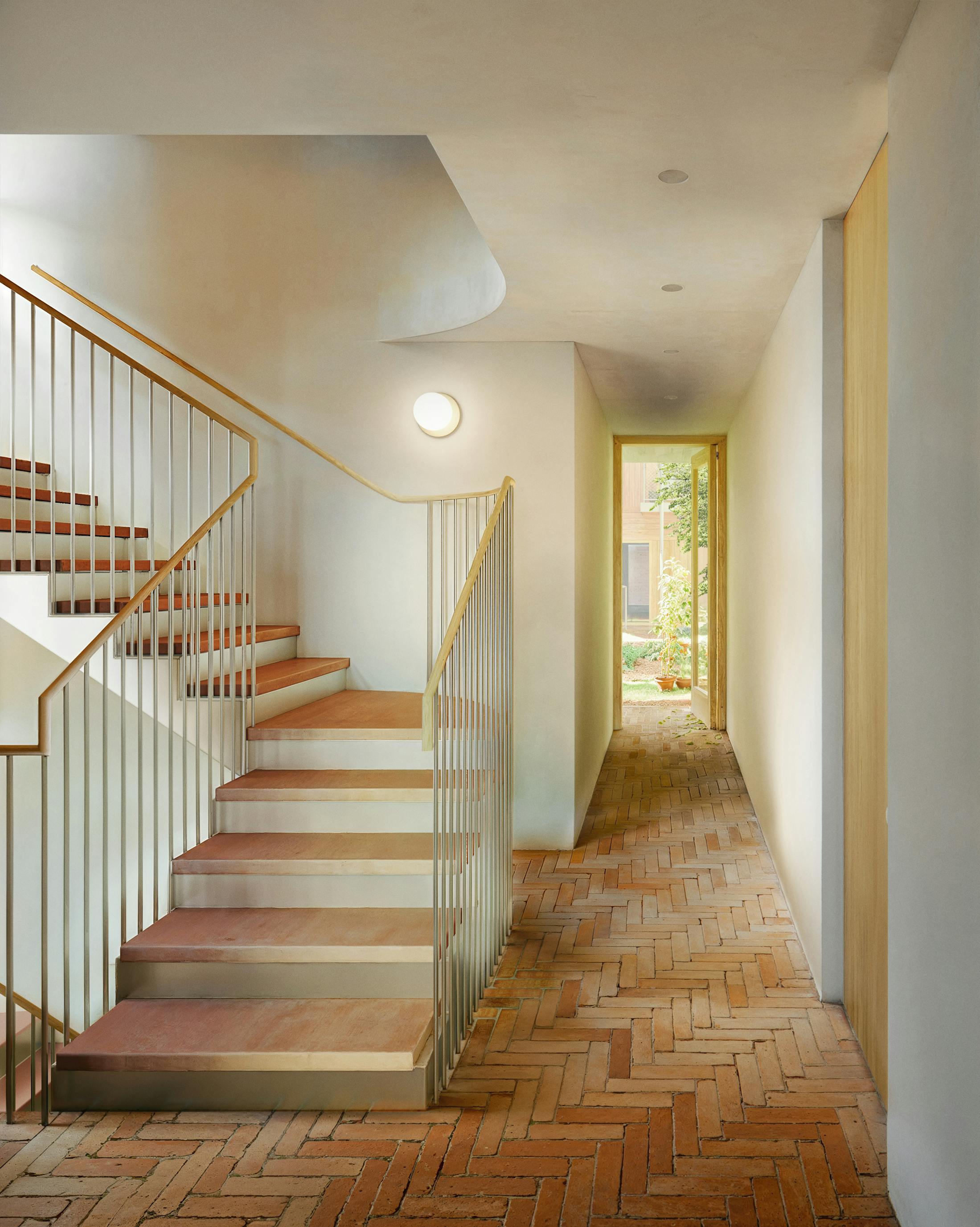
Utility areas that would typically take up much of the ground floor (such as garbage and bike storage rooms) have been relocated underground or into the public realm. This opens up a variety of possibilities for ground-floor layouts—allowing, for example, a passage directly through to the courtyard from the street.
Renders

The courtyard-block units are typically “through-units,” with views to both the street and the courtyard. This ensures that all the most important rooms have natural daylight and increases the potential for cross-ventilation.
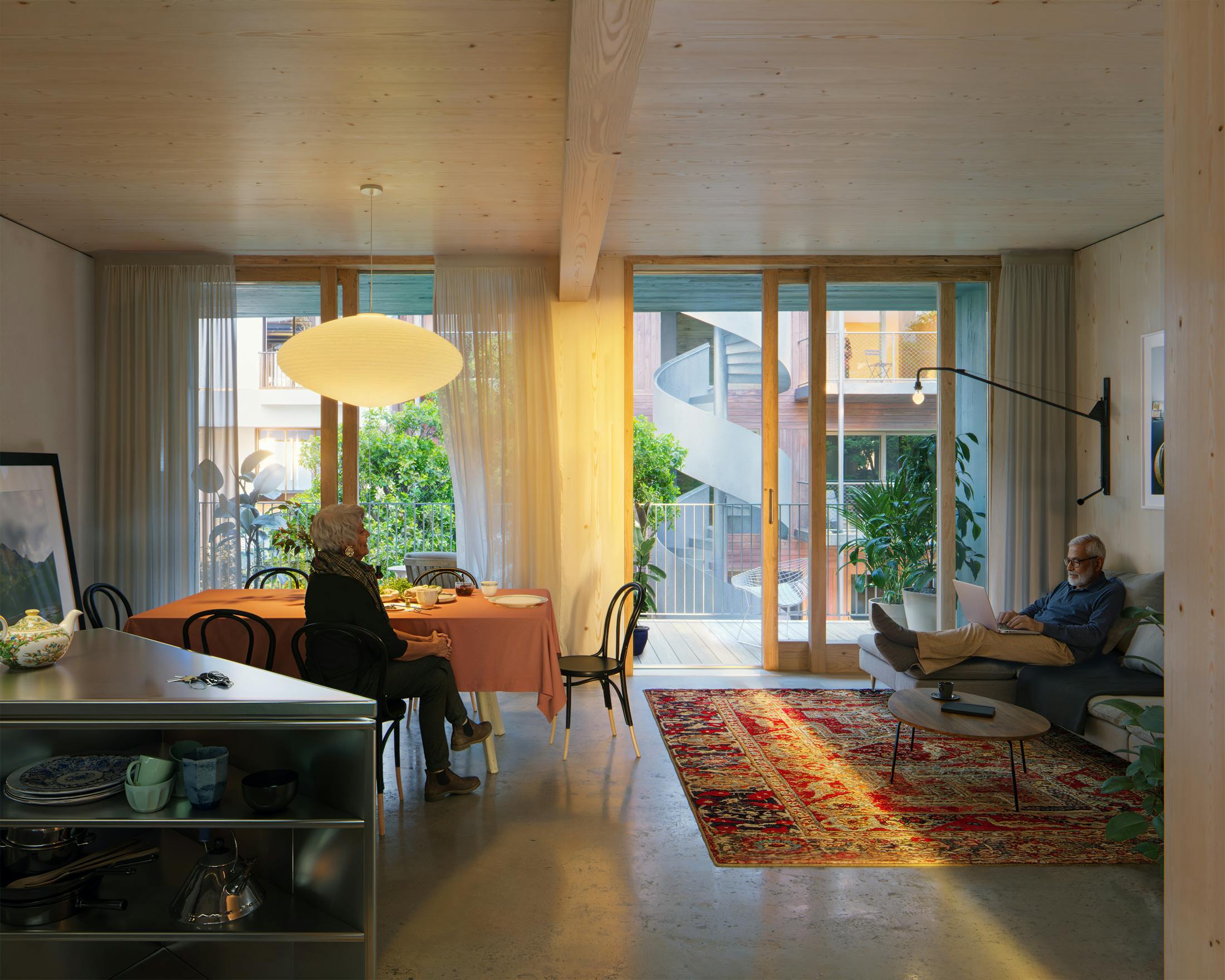
The courtyard-block typology accommodates a range of apartment types, from studios to three- or four-bedrooms, for flexibility over a life cycle. A resident could move apartments several times over their lifetime as their circumstances change and never leave their street.
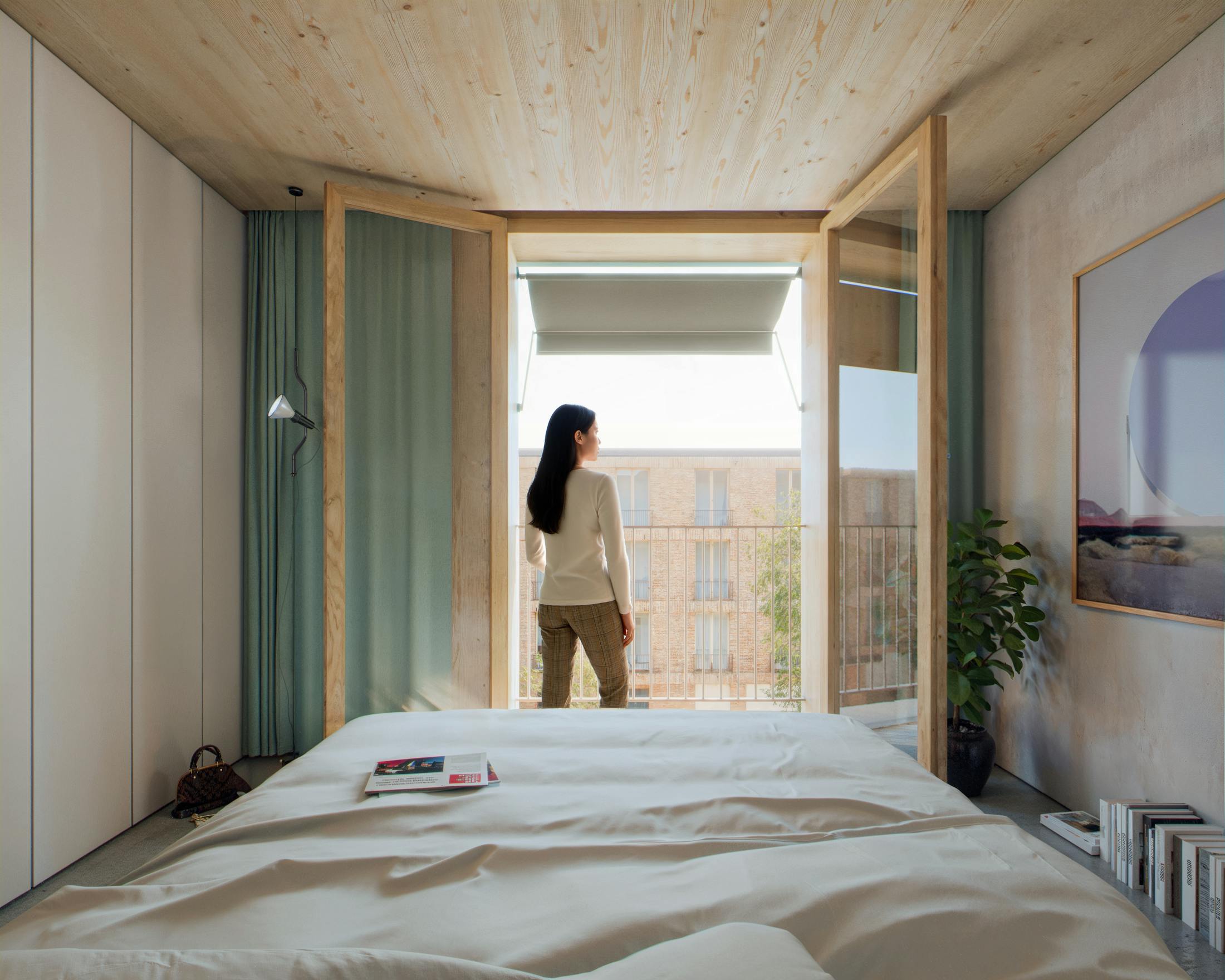
One of the goals of introducing the courtyard block to Toronto would be to provide a viable alternative to living in houses. As such, units need to be well proportioned: they need not be immense to be comfortable but neither should they tend towards the “micro” apartments that have become more common in recent years.
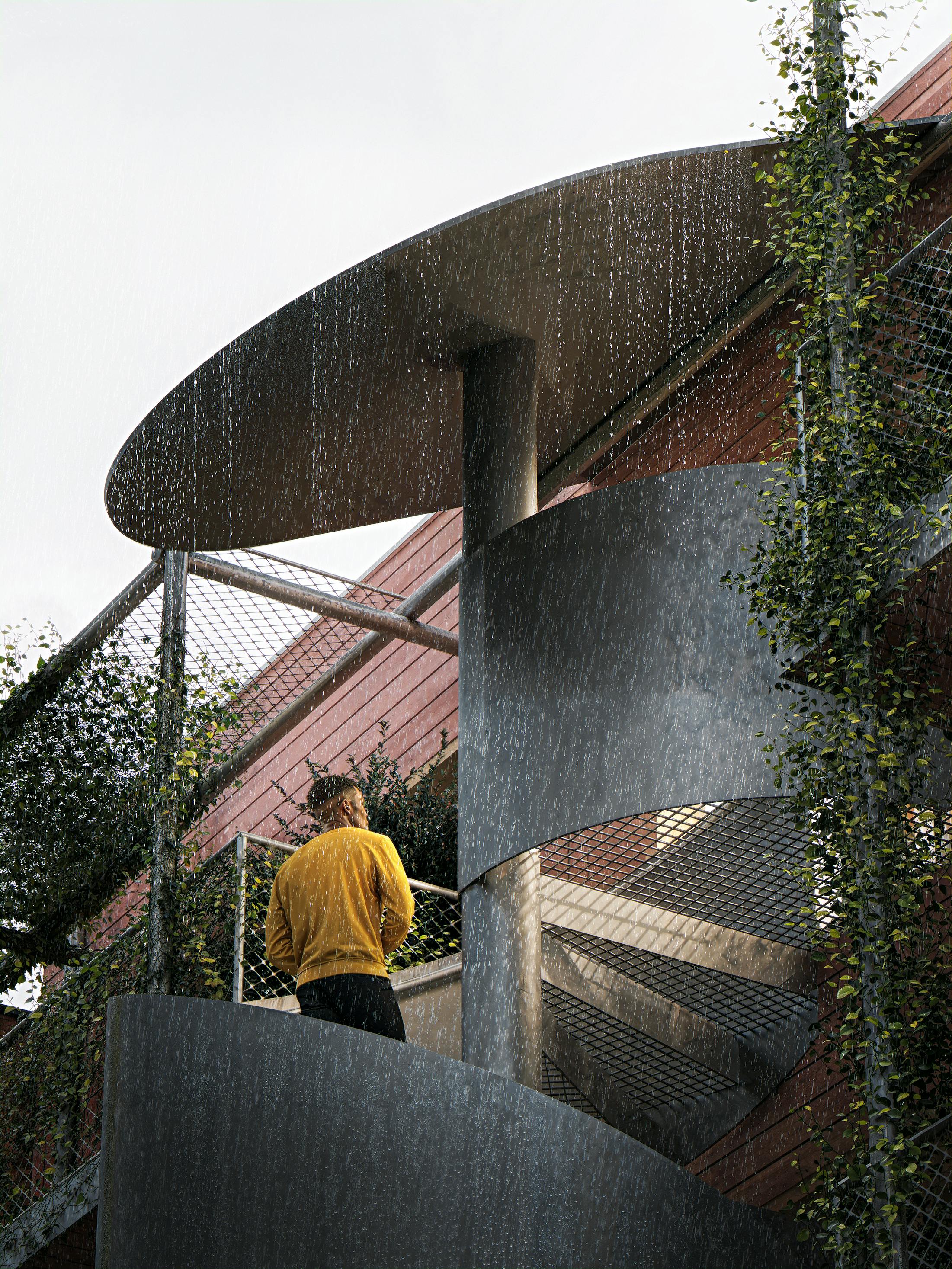
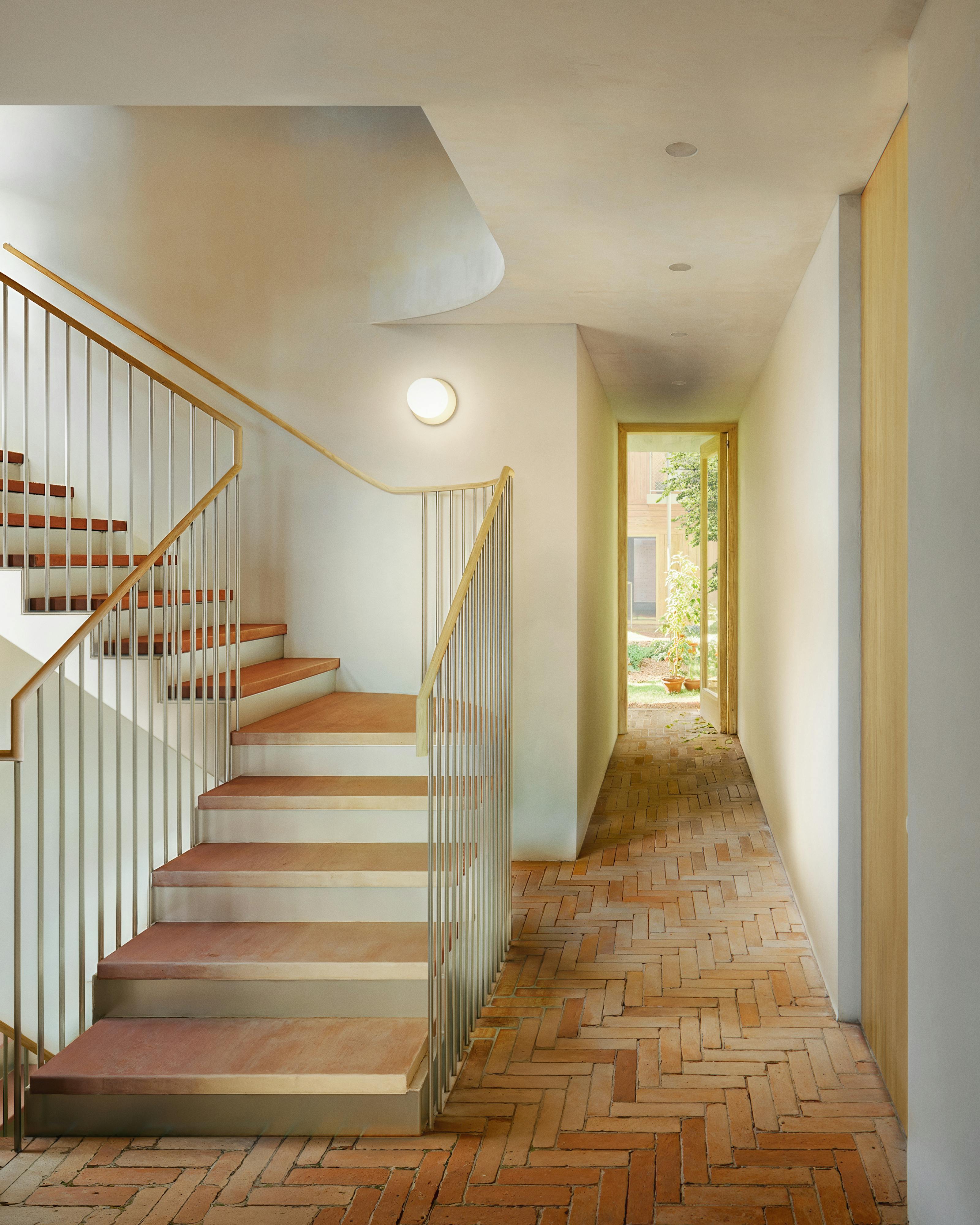
The single open stair, directly visible from both the building entry and from each unit’s front door, encourages those residents who can to use the stair as much as possible and increases the likelihood that neighbours will have the opportunity to see and get to know each other, fostering a greater sense of community.
Drawings
Ground Floor Plan